Beyond Performance
Leadership Role Coaching
"What we experience as personal is often systemic." — Barry Oshry
Why do capable leaders sometimes find themselves stuck?
Perhaps a decision keeps circling without resolution. A working relationship has become increasingly difficult. You may be carrying responsibility without enough authority, or finding that your role feels heavier than it should. It is easy to assume the answer lies within you: be more confident, more resilient or more strategic. Sometimes personal development helps. But leadership never happens in isolation. It takes place within a system shaped by competing expectations, unspoken tensions, organisational history and pressure. Leadership role coaching looks at the whole picture: you, your role and the system around you. It can help you understand why a challenge has been so difficult to shift—and reveal choices that are hard to see when you are caught inside it.
Does this sound familiar?
Leadership challenges are often first experienced as something personal that needs to be fixed. Looking more closely can reveal how the role, the task and the wider context are also shaping what is happening.
I need to be more confident.
Perhaps your confidence falters in one particular setting, such as executive team meetings. The difficulty may not be confidence alone. Unspoken tensions, competing expectations or uncertainty about what your role is there to contribute may also be at play.
I need to build resilience.
You may feel depleted and conclude that you need to cope better. But in a turbulent environment, where priorities keep shifting and pressure rarely lets up, the strain may be a reasonable response to the context, not simply a reflection of your personal resilience.
I need better stakeholder management.
You may be struggling to build alignment across organisational boundaries. But when roles and responsibilities are unclear, expectations to act quickly can leave little space to surface differences and understand what is getting in the way.
.png)
A different question
Somewhere in this kind of coaching, the question changes.
It stops being "what's wrong with me" and starts being "what is this role actually asking of me, and what am I being pulled into here."
It sounds like a small shift. In practice, it changes what the conversation is even about. Instead of picking apart a personal weakness, you start looking at the role itself, what it's carrying, what it's inherited, what it's being asked to hold on behalf of everyone around it.
Leaders often describe that shift as a relief before they can even explain why. Something that felt like a character flaw starts to look like a structural pattern instead, and a structural pattern can actually be worked with.
Looking beyond the individual
This kind of coaching, sometimes called psychodynamically informed role coaching, doesn't stop at what you do day to day. It looks at how expectation and pressure attach themselves to a role, often long before you stepped into it.
In practice, that means making room for questions most workplaces don't have time for:
What's actually happening here, underneath what everyone's saying?
Whose pressure am I carrying, and is it really mine to carry?
What is this role holding on behalf of the wider organisation?
It's not therapy, and it isn't a toolkit for better performance either. It's the chance to actually see the situation before you act on it, so the action that follows is a genuine choice rather than a reflex.
.png)
Who this is for
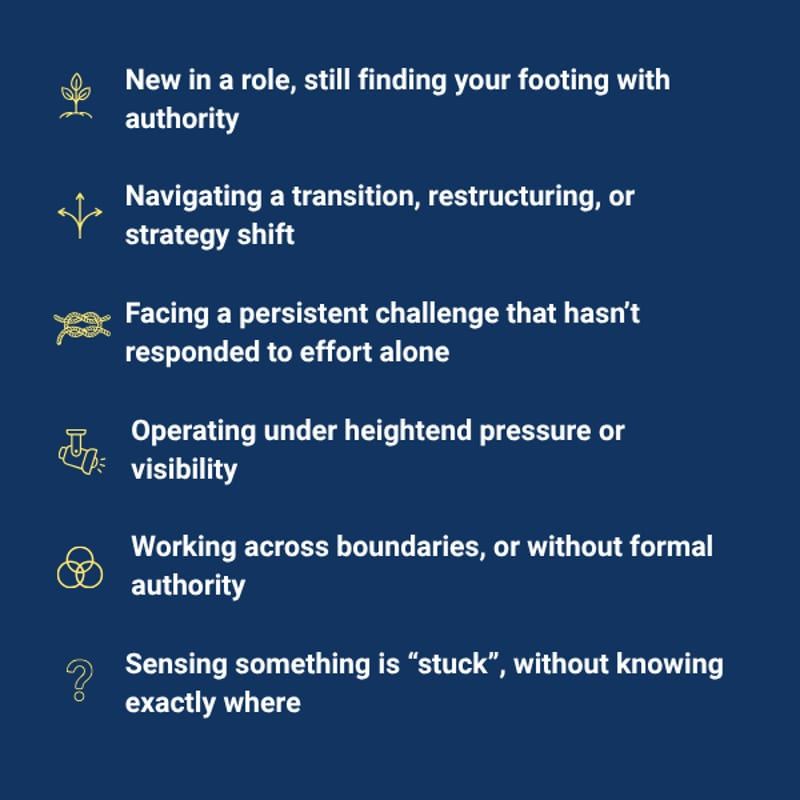
This conversation can be particularly valuable if you are new to a role and still finding your footing with authority. It can also help when you are navigating a transition, whether a restructure, a shift in strategy or something more personal.
You may be facing a problem that has resisted every reasonable effort. Perhaps you are working under scrutiny that makes clear thinking difficult, or carrying responsibility across boundaries where your formal authority does not quite reach.
If something feels stuck, even if you cannot yet put your finger on why, bring it to a free 30-minute role coaching session. Together, we will look beneath the surface and help you find a clearer way forward.
What Becomes Possible
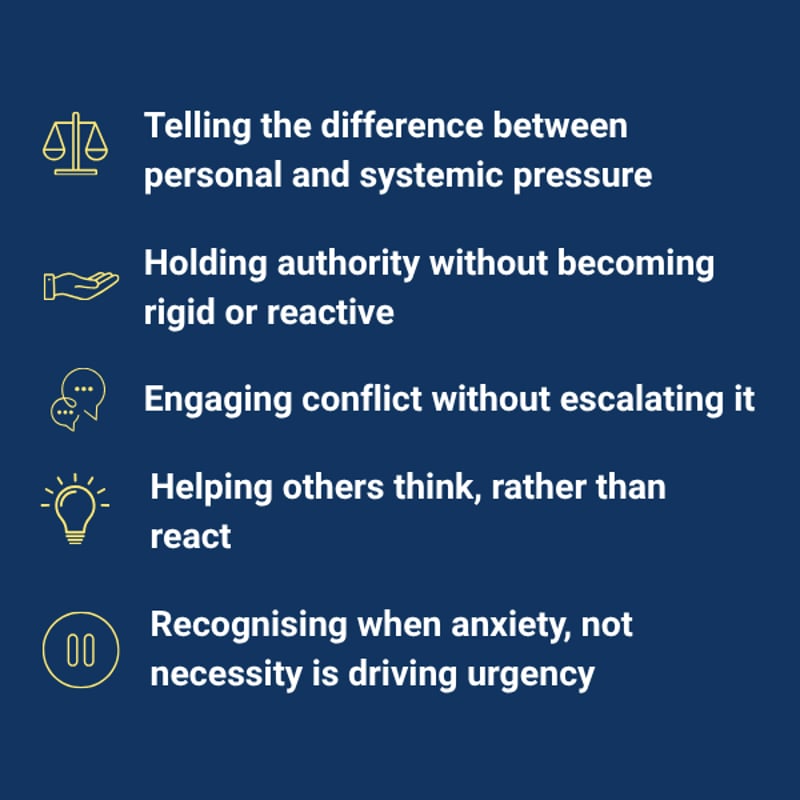
The leaders we work with this way tend to get better at telling the difference between what's theirs to carry and what belongs to the system around them. They hold authority without needing to grip it too tightly. They can sit inside conflict without needing to either win it or shut it down.
Often the most useful shift is smaller than that: learning to notice when it's anxiety driving the urgency, not the actual situation.
Meet the Coaches
NIODA’s coaches look beyond individual performance to understand the person, the role and the system together. Grounded in tertiary training in systems psychodynamics and substantial organisational experience, our team helps you uncover what is really shaping a challenge, so you can respond with greater clarity, authority and choice.

Judy Kent
A highly experienced executive coach and former C-suite leader, Judy works particularly well with senior executives navigating enterprise leadership, culture and significant change. She brings wisdom, pragmatism and a deep understanding of leading in complex environments.
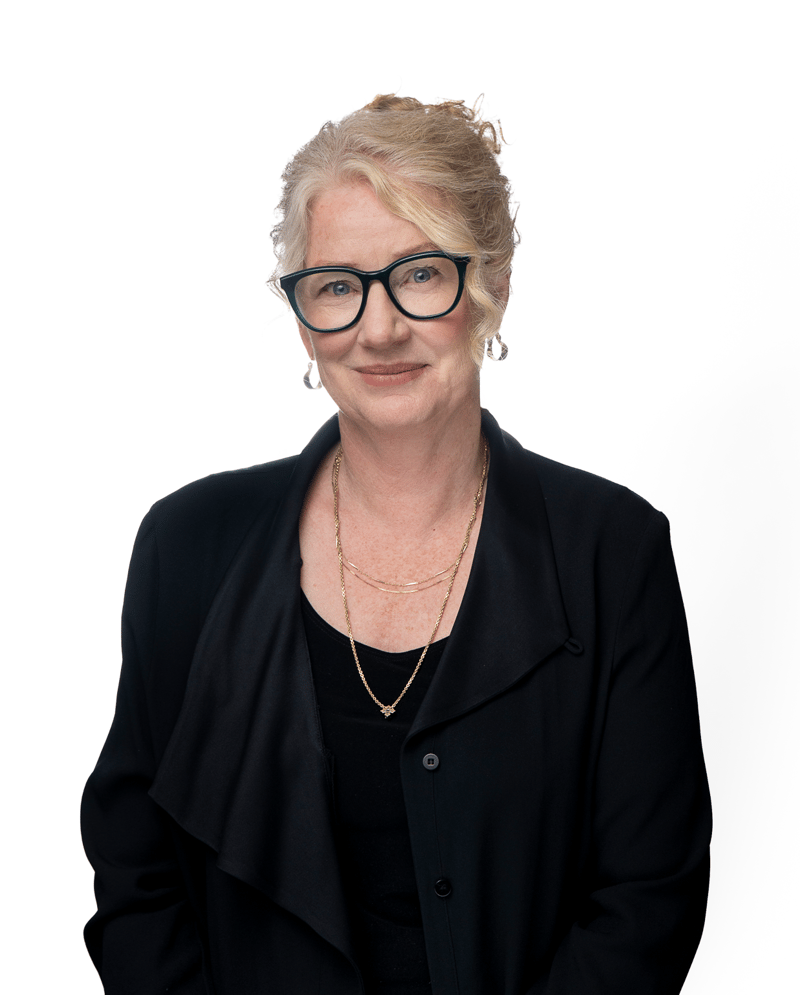
Helen McKelvie
Helen works especially well with leaders in the middle, those carrying expectations from above and below while needing to influence across organisational boundaries. Her reflective and embodied approach helps clients find greater clarity, authority and room to move within complex systems.

Thomas Mitchell
Thomas works especially well with people trying to make sense of difficult, toxic or dehumanising workplace cultures. Combining empathy with candour, he helps clients understand the dynamics they are caught in and find more humane, workable ways forward.
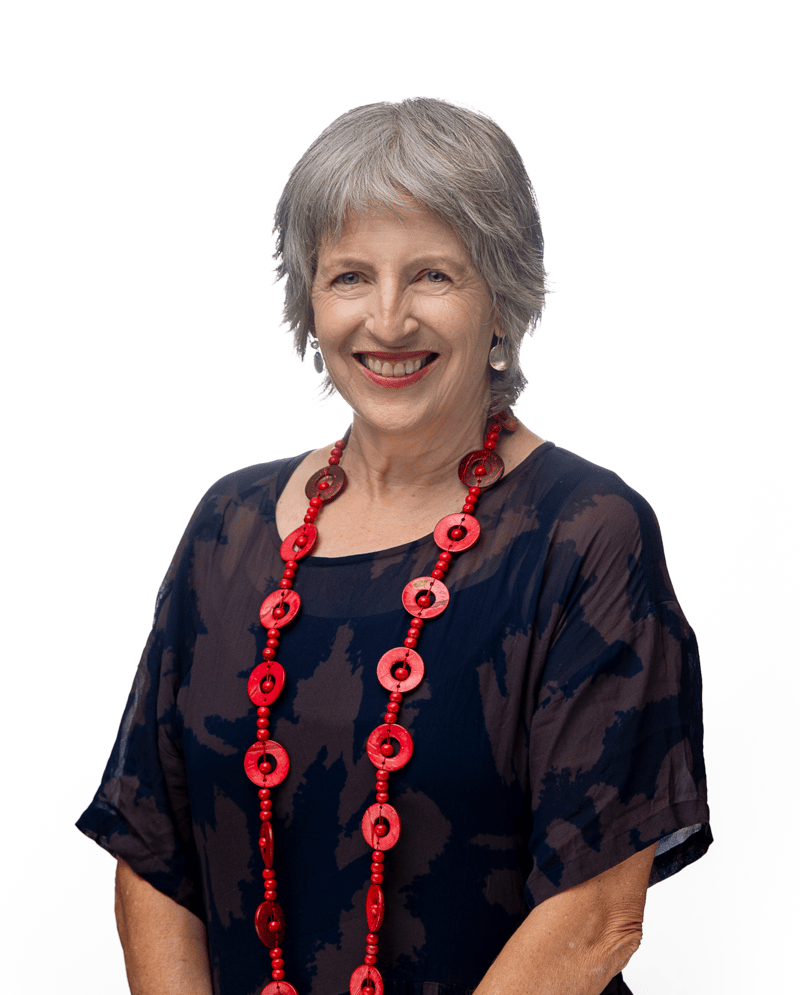
Brigid Nossal
Brigid works with leaders who are curious about what lies beneath the surface of a persistent challenge. Drawing on more than 20 years in systems psychodynamics, she helps clients explore hidden patterns and group dynamics, opening possibilities for deeper learning and meaningful change.
Try it for yourself
We're offering a free, no-obligation 30-minute taster session. It's a chance to work this way for half an hour and notice what's different about a conversation that starts with your role, not your shortcomings.
A chance to consider the value of some coaching sessions in order to help you continue to work through your challenges.