Thursday, 24 September 2026
NIODA/ISPSO Symposium 2026: Holding the Turbulent World at Work
Holding the Turbulent World at Work
This event has passed
Start Date
7:00 am Thursday 24 September 2026 (UTC)
End Date
1:00 am Sunday 27 September 2026 (UTC)
Sessions
Individual session times are below. More details will become available as panelists are confirmed.
Cost
AUD$400, member discounts available
Event Information
This year NIODA and ISPSO join forces to bring you the annual international online symposium on the topic of Holding the turbulent world at work. This combination happily brings the two organisations plans to hold separate symposia in 2026 to a combined symposium.
Scroll through this webpage to see the lists of presenter and panellists. For more details on each of the paper presentations, click the EYE icon under the name of the presenter.
We're expecting participants from around the world, so we've scheduled sessions across a range of times to make sure there's a good mix for different time zones. Rather than clustering everything in one block that works well for some and poorly for others, we've spread sessions across the symposium so that wherever you are, you'll have options at reasonable hours.
Please note, the session times on this webpage are automatically adjusted to reflect the timezone you are viewing this page from.
If you've registered and paid for the symposium you should have received an email with the full program including all the zoom links. If this has not been received, please ensure your payment has been completed. If payment is complete please email [email protected] with request for details.
Join us live online for an interactive experience packed with small group discussions so you can diver deeper into the topics.
All symposium sessions are recorded. Keynote sessions are available to all participants. Paper sessions are available on request, simply email [email protected] with the details of the session you would like to view.
The organising committee for this joint NIODA ISPSO symposium consists of Professors Susan Long and Aaron Nurick (Co-Chairs), Thomas Mitchell (Deputy Chair), Sally Mussared and Belinda Cashel.
How will I attend the sessions?
Prior to the symposium, participants will be emailed Zoom links for all sessions.
What are the sessions?
Watch this space! Once our panelists are confirmed, full details will be added to each session.
Session Times
The sessions times displayed on this page are automatically adjusted to the time zone you are viewing this website from.
What are the available member discounts?
The discounts are available on the registration form
How can I contact the organisers?
For any inquiries regarding the symposium or submission process, please contact us at [email protected]
Sessions
Social Dreaming Matrix
Starts
6:00 am Thursday 24 September 2026 (UTC)
Ends
6:55 am Thursday 24 September 2026 (UTC)
Social dreaming is a method of sharing dreams and associations to explore the social realities they may express, rather than the personal meaning of an individual’s dream. Across daily matrices, participants are invited to consider what the collective dreaming may reveal about the social, organisational and political realities entering the symposium and how turbulence is experienced, carried and held in contemporary working life.
Panel: Systemic Turbulence
Starts
7:00 am Thursday 24 September 2026 (UTC)
Ends
10:00 am Thursday 24 September 2026 (UTC)
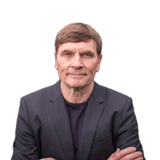
Dr Simon Western

Otti Vogt

Professor Susan Long
What becomes visible—and what disappears—when war, ecological breakdown, technological acceleration and political fragmentation are framed as turbulence?
In this opening dialogue, Simon Western and Otti Vogt begin with the familiar image of an aircraft encountering rough air. The metaphor presents turbulence as an external and morally neutral force: leaders are asked to navigate, organisations to become resilient, and individuals to adapt. Yet the discourse of turbulence has important limitations: organisations and political systems frequently co-create the very turbulence they claim merely to suffer from, while its benefits, risks and harms are distributed profoundly unequally.
Drawing on systems psychodynamics, Lacanian discourse theory, Eco-Leadership, critical realism and moral philosophy, Simon and Otti explore how turbulence unsettles authority, role and identity; how it can mobilise fantasies of control, perpetual acceleration, or authoritarian rescue; and how some actors may unconsciously enjoy, manufacture or profit from the disorder. They also examine how purpose, agility, psychological safety and systemic coaching may create conditions for greater insights while simultaneously perpetuating systems whose underlying governance systems, ownership models, and power structures remain morally defective.
The conversation proposes moving beyond the containment of anxiety towards responsibility and practical wisdom: seeing the deeper mechanisms shaping a situation, imagining alternatives, judging what the common good requires and acting across personal, organisational and political levels. It leaves participants with several unsettling questions: Whose turbulence—and whose normality? Who is making the weather? What if the aircraft is functioning perfectly but flying towards the wrong destination? What should be held—and what must be allowed to break? And how can generative holding lead to responsible action?
Moderated by Susan Long.
Social Dreaming Matrix
Starts
9:00 pm Thursday 24 September 2026 (UTC)
Ends
9:55 pm Wednesday 23 September 2026 (UTC)
Social dreaming is a method of sharing dreams and associations to explore the social realities they may express, rather than the personal meaning of an individual’s dream. Across daily matrices, participants are invited to consider what the collective dreaming may reveal about the social, organisational and political realities entering the symposium and how turbulence is experienced, carried and held in contemporary working life.
Panel: Turbulent Work Today
Starts
10:00 pm Thursday 24 September 2026 (UTC)
Ends
1:00 am Friday 25 September 2026 (UTC)

Dr Mishel McMahon

Dr Larry Hirshhorn

Brett MacFarlane

Professor Aaron Nurick
This panel focuses on the meaning and consequences of turbulence: what happens when the conditions in which organisations operate change so rapidly and unpredictably that established plans, roles, structures, and ways of working can quickly lose their usefulness? How do leaders make long-range plans when the future is so uncertain? What organisational designs enable role holders to adjust what they do and how they work as circumstances change? Do organisations, for example, increasingly come to resemble projects, with roles changing rapidly as tasks are taken up and completed?
These developments also raise questions about authority. What happens to authority when neither leaders nor followers can rely on established knowledge about what comes next? When expertise can quickly become obsolete, when those lower in a hierarchy may know more about an emerging technology than those above them, and when decisions must be made before their consequences are known, how do leaders exercise authority, and how do others authorize them to lead?
These questions challenge us to translate the idea of organisational resilience into practical terms. What enables an organisation not simply to withstand turbulence, but to adapt to it while sustaining the relationships, commitments, and capacities on which effective work depends? And might the very adaptations intended to create resilience—continually changing roles, structures, technologies, and staffing—generate turbulence of their own?
Turbulence also has a psychological dimension. How do anxieties arising from broader developments—the future of jobs and work, for example—affect how leaders lead, how people take up their roles, and how work is organised? AI brings many of these questions into particularly sharp focus. What happens to work when AI dramatically amplifies people's capabilities—for example, when apps that once required teams and long development cycles can be created rapidly by far fewer people? Is this accelerating increase in productivity constructive, destructive, or both? For example, people can establish enterprises with far fewer people and less capital and yet produce viable products or services.
Our session is intended as a springboard for exploring these and other questions as we wrestle with the turbulent settings in which we now work and live.
This panel will be moderated by Professor Aaron Nurick
Social Dreaming Matrix
Starts
6:00 am Friday 25 September 2026 (UTC)
Ends
6:55 am Thursday 24 September 2026 (UTC)
Social dreaming is a method of sharing dreams and associations to explore the social realities they may express, rather than the personal meaning of an individual’s dream. Across daily matrices, participants are invited to consider what the collective dreaming may reveal about the social, organisational and political realities entering the symposium and how turbulence is experienced, carried and held in contemporary working life.
Parallel paper session 1
Starts
7:00 am Friday 25 September 2026 (UTC)
Ends
9:00 am Friday 25 September 2026 (UTC)



Parallel paper session 2
Starts
9:00 am Friday 25 September 2026 (UTC)
Ends
11:00 am Friday 25 September 2026 (UTC)



Social Dreaming Matrix
Starts
9:00 pm Friday 25 September 2026 (UTC)
Ends
9:55 pm Wednesday 23 September 2026 (UTC)
Social dreaming is a method of sharing dreams and associations to explore the social realities they may express, rather than the personal meaning of an individual’s dream. Across daily matrices, participants are invited to consider what the collective dreaming may reveal about the social, organisational and political realities entering the symposium and how turbulence is experienced, carried and held in contemporary working life.
Parallel paper session 3
Starts
10:00 pm Friday 25 September 2026 (UTC)
Ends
12:00 am Saturday 26 September 2026 (UTC)




Social Dreaming Matrix
Starts
4:00 am Saturday 26 September 2026 (UTC)
Ends
4:55 am Thursday 24 September 2026 (UTC)
Social dreaming is a method of sharing dreams and associations to explore the social realities they may express, rather than the personal meaning of an individual’s dream. Across daily matrices, participants are invited to consider what the collective dreaming may reveal about the social, organisational and political realities entering the symposium and how turbulence is experienced, carried and held in contemporary working life.
Parallel paper session 4
Starts
5:00 am Saturday 26 September 2026 (UTC)
Ends
7:00 am Saturday 26 September 2026 (UTC)




Panel: Holding/containing Turbulence
Starts
7:00 am Saturday 26 September 2026 (UTC)
Ends
9:00 am Saturday 26 September 2026 (UTC)
Dr Rica Vilijoen

Dr Vusi Vilikati

Dr Tiago Mendes

Thomas Mitchell
The third containment panel brings together Dr Vusi Vilakati, Tiago Mendes and Dr Rica Viljoen in a shared conversation that both reflects on and extends the themes emerging throughout the symposium. Drawing from diverse psychoanalytic, organisational and cultural perspectives, the panel will explore how the concept of containment has evolved across traditions and how it may help us engage the turbulence of contemporary organisational and societal life.
The richness of psychoanalytic thought lies in its multiple schools and traditions. From the work of Klein, Winnicott, Bion, Jung and Graves to contemporary systems psychodynamic applications, containment has been understood in different but complementary ways. This conversation will explore these intersections while also crossing traditional boundaries between theory and practice, individual and collective experience, and organisational and societal realities.
Dr Vusi Vilakati brings an African consciousness and organisational leadership perspective, exploring positionality, relationality, story and the historical and cultural contexts shaping leadership and organisational life in Africa.
Tiago Mendes contributes scholarly insight into the development of psychoanalytic concepts and the continuing relevance of containment across traditions.
Dr Rica Viljoen brings a lens of inclusivity, emergence and multicultural engagement, drawing on Jungian thinking and Spiral Dynamics to explore how containment can create spaces where differences are held creatively and new possibilities emerge.
Together, the panel will seek not only to contain the conversations of the symposium, but also to open them outward towards the wider challenges, tensions and opportunities shaping the world of work, leadership and society today.
This panel will be moderated by Thomas Mitchell
Parallel paper session 5
Starts
9:00 am Saturday 26 September 2026 (UTC)
Ends
11:00 am Saturday 26 September 2026 (UTC)





Social Dreaming Matrix
Starts
10:00 pm Saturday 26 September 2026 (UTC)
Ends
10:55 pm Wednesday 23 September 2026 (UTC)
Social dreaming is a method of sharing dreams and associations to explore the social realities they may express, rather than the personal meaning of an individual’s dream. Across daily matrices, participants are invited to consider what the collective dreaming may reveal about the social, organisational and political realities entering the symposium and how turbulence is experienced, carried and held in contemporary working life.
Reflections
Starts
11:00 pm Saturday 26 September 2026 (UTC)
Ends
1:00 am Sunday 27 September 2026 (UTC)

Professor Susan Long
Professor Aaron Nurick

Thomas Mitchell

Sally Mussared

Belinda Cashel
The closing plenary offers the opportunity for all participants to reflect on, share experience of and learnings from the 2026 NIODA/ISPSO online Symposium. It will be led by the Symposium Planning Committee: Susan Long; Aaron Nurick; Thomas Mitchell; Sally Mussared and Belinda Cashel. The Symposium will be closed by Sally Mussared (NIODA CEO) and Alexandra Gerny (ISPSO President).