Slow Down to Lead: The Reflective Edge in Leadership and Management

In today's world of relentless urgency, being constantly busy has become a badge of honour. Many leaders equate movement with progress, filling their days with meetings, decisions, and deliverables. Yet amid this constant motion, something vital can be lost. The capacity to think deeply, connect meaningfully, and lead wisely.
Slowing down to lead is not about withdrawing or doing less. It is about creating space to think, to explore, and to uncover what is really going on. Within ourselves, with others, and in the wider system. Reflection is the circuit breaker that interrupts reactivity and restores discernment. It is how leaders move from being driven by events to shaping them.
The Cult of Busyness
Busyness has become the modern measure of worth. When leaders say they are flat out, it signals importance, commitment, productivity. Yet beneath the surface, busyness often masks anxiety. The fear of being left behind, of not being needed, of being found out.
Many professionals feel they must always appear in control, even when the pace is unsustainable. As one of our students, a senior leader, said: "If I'm not running, I'm losing." This perpetual motion keeps leaders reacting rather than leading. Meetings multiply, inboxes overflow, and genuine reflection becomes a luxury.
But leadership that never slows down loses perspective. It becomes harder to distinguish what truly matters from what merely demands attention. The risks are real: flawed decision-making, blind spots that go unchecked, unhelpful patterns that quietly take hold. In these circumstances, reflection is not indulgence. It is the practice that brings discernment back into leadership.
The Power of Pause
Slowing down to lead begins with pausing. Not stopping. Just interrupting the automatic patterns of doing long enough to actually think.
Pause creates space to shift from reaction to reflection, from anxiety to awareness. It opens the possibility of thinking about what is really happening, rather than just responding to it.
For leaders, reflection provides a way to ask the questions that busyness keeps pushing aside.
What is really going on here? What assumption am I making? What is being avoided or left unsaid? What am I feeling, and why?
These questions invite insight. They help leaders see the systems they are part of, rather than feeling swept along by them. As John Dewey argued in How We Think, we do not learn from experience. We learn from reflecting on experience. Reflection turns activity into learning and experience into wisdom.
At NIODA, reflection is understood as a discipline of attention. It involves looking beneath events to their emotional and relational undercurrents, the dynamics that often explain why sensible strategies falter or why good people end up in conflict. Slowing down and building reflective practice into the rhythm of work is how leaders begin to notice, name, and work with these deeper patterns.
Slowing Down is Not a Vulnerability
For many professionals, especially those working in competitive environments, slowing down can feel risky. The fear is that pausing may appear indecisive or unproductive. To reflect is to risk revealing doubt or emotion in cultures that prize certainty and control.
But reflection is not a retreat from leadership. It is a refinement of it. Leaders who pause, think, and inquire are not fragile. They are formidable in their psychological presence.
This presence draws on what the poet John Keats called negative capability: the ability to remain in uncertainties, mysteries, and doubts, without any irritable reaching after fact and reason. The psychoanalyst Wilfred Bion later applied this to leadership and group life, describing the capacity to tolerate not knowing long enough for new understanding to emerge.
Reactive leaders tend to seek immediate closure. Uncertainty feels intolerable, so they rush to decide, fix, or explain. Reflective leaders can bear with the discomfort of ambiguity and hold open the space where deeper insight can form. This is not passivity. It is disciplined patience. The strength to think when under pressure, when others are rushing to act.
Slowing down builds inner space. It allows leaders to notice their own responses before reacting, to read the emotional field around them, and to choose how to intervene.
The Emotional Landscape of Leadership
Leadership is not only a cognitive task. It is emotional work. Every decision, meeting, and change carries emotional weight: hope, fear, frustration, ambition. Often these feelings operate below the surface, shaping behaviour in ways people do not consciously intend.
In NIODA's Masters program, students come to see that emotions are not distractions from the work of leadership. They are data about it. When leaders can stay curious about what emotions reveal in themselves, in their teams, and across the whole system, they gain access to a deeper kind of intelligence.
The challenge is to stay curious about emotion rather than dismissing it or becoming defensive. In group settings, the work becomes turning emotion into insight by containing it. Making it discussable, linking it to patterns, using it to inform better decisions.
As leaders develop this capacity, they become more attuned to what is happening beneath the surface and less susceptible to being pushed around by symptoms within the organisation. That is what we mean by real leadership.
Reflection as Immunity
Organisations, like organisms, develop symptoms when anxiety runs high. Blame, burnout, siloed thinking, toxic competition. Reflection acts as a form of immunisation against these dynamics.
A reflective leader with a clear centre is less likely to be drawn into reactive patterns. At NIODA, we often describe reflection as strengthening a leader's psychological immune system. When a leader has developed self-awareness and a capacity for sensemaking, projections and pressures from others have less power to distort their judgment.
Teams led by reflective leaders tend to experience greater trust, clarity, and creativity. The leader's presence allows others to think more freely and take thoughtful risks. Reflection creates the conditions for genuine psychological safety. Not safety as in the absence of challenge, but the safety of honesty and robust discussion.
From Individual Practice to Organisational Culture
When leaders slow down to lead, they set a different tempo for their organisations. Reflection becomes not just an individual practice but a collective norm. Meetings shift from reporting to opportunities for inquiry and creativity. Conflict becomes a source of learning rather than negativity and blame. The organisation starts to think about its own thinking.
In times of complexity, the ability to reflect, to pause, sense, and adapt, becomes the foundation of organisational agility. Teams that reflect together build trust, engage more deeply, and make wiser decisions.
The growing focus on psychological safety in workplaces, reinforced by emerging legislation and organisational health standards, points toward this same need. Reflection is one of the most effective ways to build genuine psychological safety, because it encourages people to speak up, listen, and engage with difference respectfully. It cultivates maturity, not fragility.
The Leadership Shift: From Reaction to Reflection
Leaders who cultivate reflective capacity lead differently. They don't rush to fix or control. They pause to understand and influence more effectively.
The difference shows up in practice. A reactive leader prioritises speed and visible activity, reacts quickly to regain control, sees emotion as distraction, and tends to feel isolated under pressure. A reflective leader prioritises insight and purposeful action, pauses to understand context before responding, sees emotion as data, and builds shared reflection in their team.
Reflection doesn't slow leadership down. It deepens it.
Learning to Lead Differently
This kind of capability requires a different kind of learning. Not just acquiring new tools or techniques, but developing the capacity to engage with the deeper dynamics of leadership while you are living it.
That means developing three things over time. The habit of reflecting on experience, looking beneath events to what they reveal about patterns and relationships. The capacity to notice recurring dynamics in how people relate and behave. And the ability to stay curious and grounded when complexity and tension are at their highest.
At NIODA, this is at the core of how we work. Through postgraduate study, coaching, and consulting, we support leaders to explore the deeper dynamics of their work while they are in it. Participants bring real challenges into the process, reflect on their own roles and teams, and develop insight they can apply straight away. Over time, leaders begin to see differently. And therefore lead differently.
Slow Down to Lead
In a world addicted to urgency, reflection is a radical act. It interrupts the illusion that busyness equals value. It allows leaders to focus on what truly matters and to create the conditions for others to think, grow, and contribute.
At NIODA, we believe reflection is the work of leadership itself. Not an optional extra.
Slowing down to lead is not about stepping back or checking out. It is about leading from a deeper centre. It means developing the capacity to stay thoughtful amid pressure, to use emotion as information, and to hold a wider view of what is happening around you.
Because in the end, slowing down isn't a luxury. It's how you learn to lead.
Interested in developing your reflective capacity as a leader? Explore the NIODA Master of Leadership & Management, our coaching and consulting services, or read more What Leaders Don't See at nioda.org.au
Related insights
Have you been reading organisations all your working life?
Ever wonder why formal plans rarely match workplace reality? Discover how reading organisations and systems psychodynamics turn curiosity into disciplined leadership
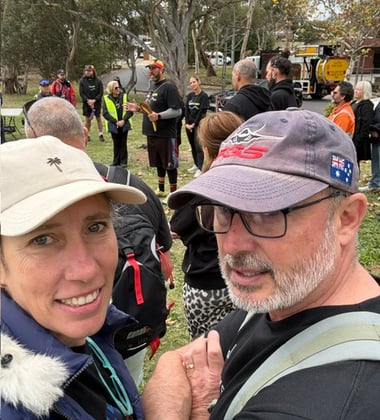
Walking Together: Reflections from the Walk for Truth
A wet Canberra morning at the Walk for Truth sparked a question: could walking together transform how teams connect, converse and reflect?
This course finds people. Perhaps it has found you.
On what it means to study the experience of work, and why that matters more than ever.