Symposium 2026 | Holding the turbulent world at work | Parallel Paper Session 4
Identity Matrix: Seeing the Turbulent World Through Belonging to Large Groups
Irina Brazhnikova & Tatyana Ezhova
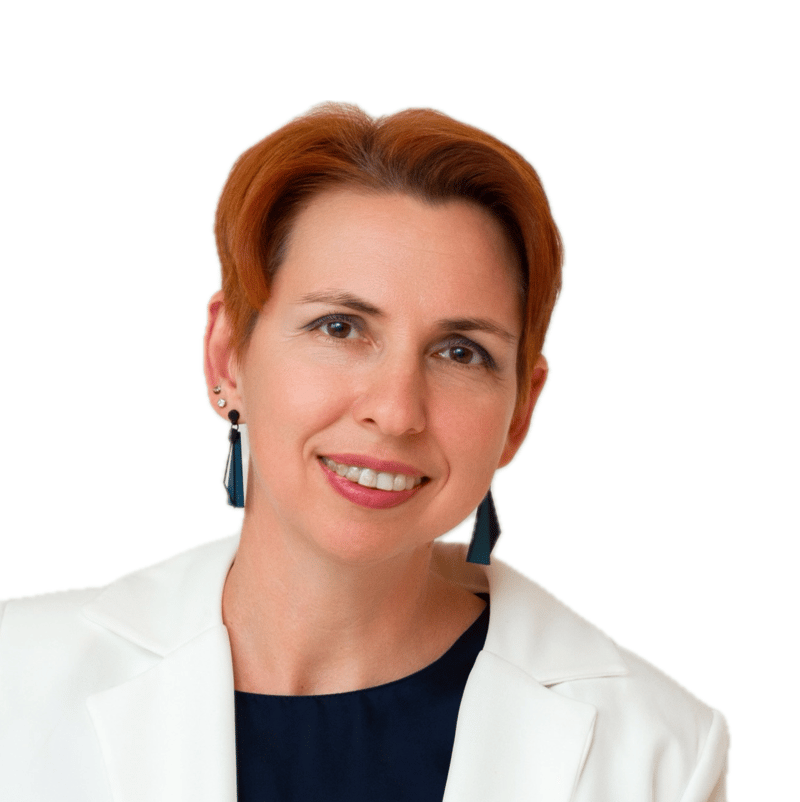
Irina Brazhnikova
Irina Brazhnikova holds degrees in MA Psychology (Higher School of Economics, Moscow, 2020) and MA Mathematics (M.V. Lomonosov Moscow State University) and works as a psychodynamic coach and business consultant with private and corporate clients. Irina’s previous professional experience includes change manager’s and certified Lean&SixSigma project manager’s roles at Raiffesenbank Russia and Rosbank (Société Générale S.A.).
Irina is also a Psychoanalysis and Business Consulting Master’s Program Supervisor at the Higher School of Economics. She has regularly taken part in Group Relations Conferences since 2021. Irina is a member of ISPSO (International Society of Psychoanalytic Studies of Organisations), a member of the Ethic Committee, and a Certified Professional Business Coach of the Psychoanalytic Coaching and Business Consulting Association (Moscow).
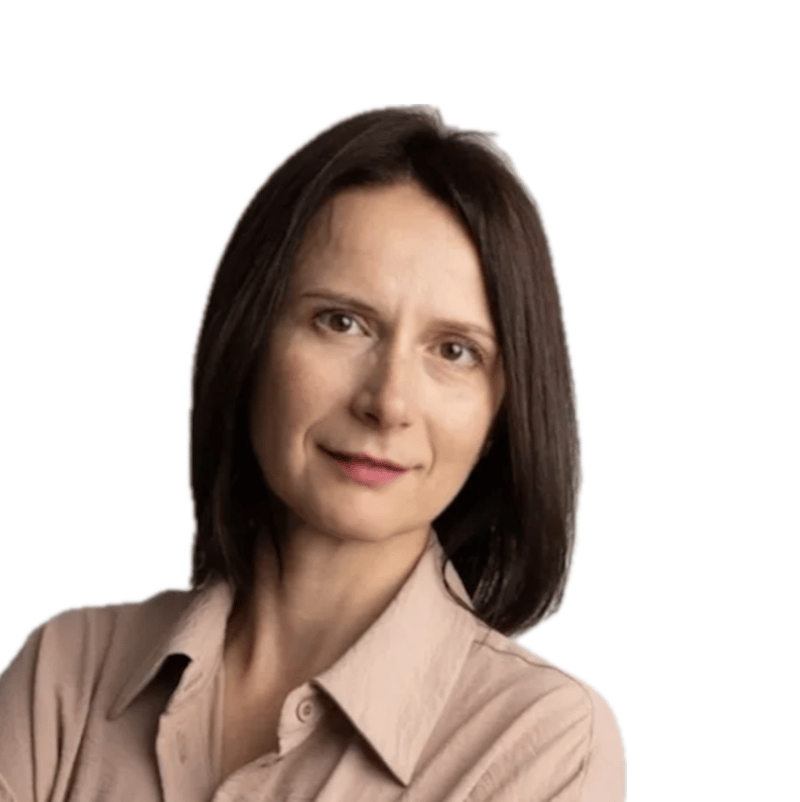
Tatyana Ezhova
Tatiana Ezhova is an organisational psychologist, executive and team coach, and researcher of intergroup dynamics and social identity, based in Moscow, Russia. She combines expertise in management, sociology, and psychoanalysis in her work with leaders, teams, and organisations across industries, including financial services, telecom, manufacturing, digital business, retail, and strategic consulting. Her background includes leading HR projects in Russian and CIS companies, supporting MBA/EMBA programs at Skolkovo School of Management, and heading the Effective Teams practice at HSE University. She teaches Career Counselling and Team Counselling at the Higher School of Economics and, since 2026, has been a PsyD candidate in Leadership Psychology at William James College, USA.
Tatiana is a consultant with Group Relations Russia & Kazakhstan, has participated in Tavistock group relations conferences, and served as a consultant at the UAE GRC in 2024. She is the translator and academic editor of the Russian edition of Larry Hirschhorn’s The Workplace Within: Psychodynamics of Organisational Life and led the 2025 Russian regional ISPSO meeting on “The Female and Male Worlds of Business.” She is an associate member of CIPD and ISPSO and is certified in organisational consulting and psychometric assessment tools, including Hogan and Base.Pro.
Abstract
At the symposium we are aiming to present the results of an exploratory study based on a socioanalytic reflective laboratory, “Identity Matrix: The Invisible Bond in Large Groups”, to be conducted online with Russian-speaking participants. The laboratory will integrate a modified OPUS Listening Post format with the Trilogy Matrix method developed by Richard Morgan-Jones to inquire into unconscious dynamics of collective identity, leadership and influence in times of social turbulence. At the symposium, we will share the findings and reflections from these meetings; the number of sessions is yet to be determined, as the project is currently in its early stage.
The design will combine a Listening Post-informed structure for surfacing experience with the Trilogy Matrix Event method, which separates and then reconnects three vertices of experience: the person, the group and the wider organisational-societal field. This configuration aims to provide a generative container in which unconscious aspects of collective identity and leadership dynamics can be observed, named and thought about.
Specifically, we will investigate: how participants negotiate the paradox of wanting to belong while fearing loss of individuality; how the “lens” of collective identity reshapes – and, in some cases, distorts – the perception of “others” who do not share the same identity; the translation of societal anxieties (particularly those shaped by political and economic instability) into groups’ narratives and task performance; how sub-groups temporarily embody split-off positions (e.g., “managers” versus “professionals”, “local” versus “global”); how participants experiment with new role-taking in relation to authority when invited to comment from different identities; and everything else that will emerge during the sessions.
We believe that combining Listening Post and Trilogy Matrix methods provides a flexible, ethically minded setting for “holding” the turbulent world by linking personal, organisational and societal experience without collapsing their differences. The paper will conclude with implications for consultants, coaches and leaders who wish to design socioanalytic spaces that help groups and organisations bear, symbolise and think about turbulence, rather than merely defend against it.
Presented by