Symposium 2026 | Holding the turbulent world at work | Parallel Paper Session 2
Being with turbulence
Mark Argent
Mark Argent
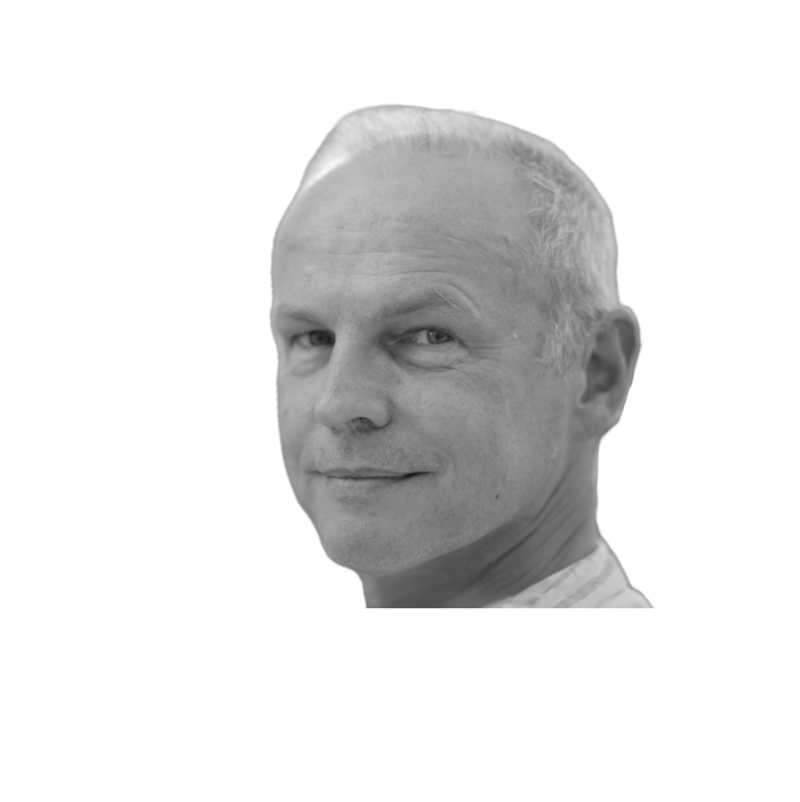
Mark Argent is an organisational consultant and psychoanalyst in private practice, based in Cambridge, UK. He’s also actively involved in politics, having stood as a candidate for the Liberal Democrat party in each UK General Election since 2015.
Abstract
Recently, the wide-spread use of the term VUCA (Volatile, Uncertain, Complex, Ambiguous) has been giving way to a new acronym BANI (Brittle, Anxious, Non-linear, Incomprehensible), which seems to push the instability a level further.
Ian Morris’ Why the West rules, for now, captures a sense of the profound shock for Westerners brought up on the conviction of western dominance, now having to adjust to the realisation that that is far from inevitable. Covid accelerated many changes, including work-from-home and increased electronic connectedness. Some politicians have concluded that the anxiety around climate change can be addressed by denying the problem, which doesn’t remove the suspicion that this isn’t working.
In many organisational contexts I’ve noticed a mis-match — the existence of instability “out there” is acknowledged in private conversation (sometimes with the avoidance of “difficult” topics) but there’s also the expectation that the organisation will deliver a satisfactory working environment.
The Chinese epic The romance of the three kingdoms, written nearly two millenia ago, begins “The empire, long divided, must unite; long united, must divide”. It’s holding in the Chinese heritage a sense of the inevitability of change.
At the time when the UK was going through its early discussions of what Brexit would actually mean, I was slowly revisiting the Hindu epic Mahabharata. On several occasions it seemed as though the text of Mahabharata was speaking directly into the latest part of the Brexit saga: my sense was that the epic was in touch with the same human realities, and helped me shift from seeing the latest instalment as something uniquely bad, to the latest manifestation of something we have seen before.
In the West, religion is sometimes seen as part of the rigidity that makes turbulence hard to handle. Jung talks of religion in the West having lost its way. That leaves us less able to engage with the unconscious content that might enable us to draw on the heritage of how humanity has dealt with turbulence.
Psychoanalysis may be part of the problem — in as much as it can be seen as giving a mastery of the unconscious. But it also offers a way to recognise being in relation to lack. In a clinical context that is about enabling a new understanding to emerge by not reaching for a familiar “tool”. More formally, Philip Boxer’s “three moments and three crises” opens up the possibilities created by “an identification with a situated way of being in relation to lack”. My sense is that there is pressure to respond to turbulence with “solutions”, which simply hide it (and ways of engaging with it) — where this way of thinking offers a more generative pathway.
The paper looks at the engagement with lack, and some of the resources in religious traditions that have helped with this in the past and offer ways to think about the engagement with turbulence in the present.
Presented by